

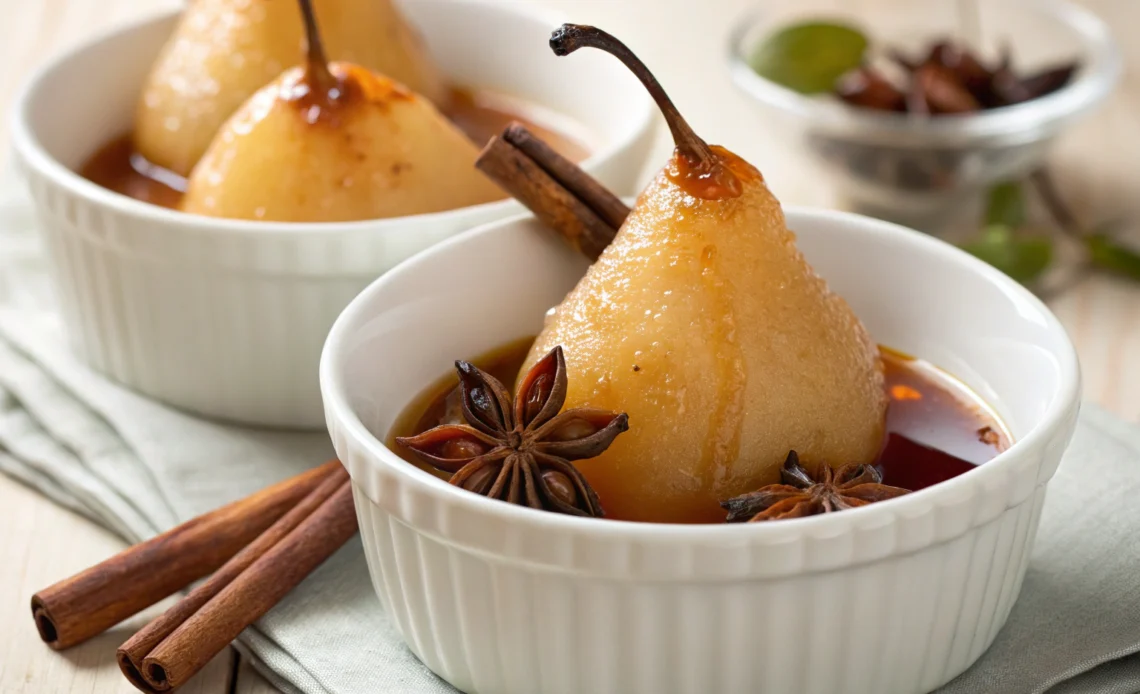
Imagine taking a bite of a pear so tender it melts in your mouth, its sweetness balanced by a hint of cinnamon and vanilla. That’s the magic of poached pears, a dessert that’s as elegant as it is effortless. But here’s the thing—some people assume poaching requires wine, a complicated process, or even a kitchen detox. Others stay away out of fear of overcooking or disappointing their taste buds.
Trust me, this isn’t one of those “you’re doing it wrong” moments. It’s a poached pears recipe that’s surprisingly simple and packed with flavor, and it’s perfect for anyone who wants a healthy dessert that doesn’t compromise on taste. Whether you’re a busy parent, a curious beginner, or a foodie seeking a crowd-pleaser, you’ll want to know: How do you poach pears?, Which liquid is most commonly used when poaching pears?, and What does poached pear mean? These questions are the gateway to unlocking the delicious potential of this timeless treat.
Ready to transform your kitchen into a haven of sweet and savory harmony? Let’s dive in.

Table of Contents
Why You’ll Love This Poached Pears Recipe
There’s something undeniably comforting about poached pears—they’re like the gentle hug of a warm apple pie, but with a twist. This recipe is a game-changer because it’s so easy to master, even for those who’ve never cooked dessert before. No oven, no complicated techniques, just a simmer and a slotted spoon. And let’s not forget: poached pears are naturally gluten-free and vegan, making them a guilt-free indulgence. You’ll love how they pair with everything from whipped cream to fresh berries, and how they elevate your breakfast or dinner table without breaking a sweat.
Bos and Anjou pears are the stars of this recipe, but the magic lies in the subtle choices you make. A dash of cinnamon, a sprinkle of star anise, and a hint of vanilla turn these humble fruits into something extraordinary. Plus, you can customize the flavor profile to suit your mood—want more spice? Add cloves or nutmeg. Craving a citrus burst? Swap some water for orange juice. The possibilities are endless, and you’ll realize that poached pears aren’t just dessert; they’re a canvas for creativity.
For those who’ve ever said, “I don’t have time to cook a dessert,” this recipe is your answer. It’s ideal for meal prepping, weekend baking, or impressing guests with a dish that feels fancy yet simple. The key selling points? Quick preparation, no bulky equipment, and a flavor that’s both familiar and fresh. With a few tweaks, you’ll have a dessert that’s as healthy as it is unforgettable. And if you’re ever wondering, “Do you peel pears before poaching?” the answer is yes—and I’ll show you the why, how, and when.
Key Ingredients and Substitutions
The foundation of poached pears is simple: a few ripe pears, a liquid that transforms them into something extra special, and a handful of spices for flavor. Here’s what you’ll need:
| Ingredient | Quantity | Notes |
|---|---|---|
| Pears | 4 | Firm, ripe pears work best. Choose Bosc or Anjou for the right balance of sweetness and texture. |
| Water | 4 cups | Use it as the base, or swap it with apple juice for a deeper flavor or white wine (if you’re open to it—though we’ll discuss alternatives later). |
| Granulated sugar | 1/2 cup | Adjust to taste, or opt for brown sugar for a richer depth or a sugar substitute for a lower-carb twist. |
| Vanilla extract | 1 tsp | Infuse a subtle warmth into your poached pears. |
| Cinnamon sticks | 2 | Infuse your poaching liquid with a classic fall flavor. |
| Star anise | 2 | Its licorice-like aroma adds complexity to your dish. |
| Lemon zest | 1 tsp | Bring a bright, refreshing note to your poached pears. |
Now, let’s talk about what makes these ingredients essential. The pears are the star, chosen for their structure and natural sweetness. The water (or alternative) creates the glaze that tenderizes and flavors them, while the sugar ensures the right consistency and sweetness. Spices like cinnamon and star anise infuse the poached pears with depth, and lemon zest adds a pop of brightness. But here’s the fun part: you can customize. If you’re a fan of bold flavors, consider adding cloves, nutmeg, or even a pinch of cardamom. For a vegan version, skip the sugar and use agave nectar or a sugar substitute. If you’re curious about the role of eggs in a traditional poaching process, rest easy—they’re not needed here. This is a poached pears recipe that’s adaptable to your dietary preferences and taste buds. And if you’re wondering, “Do you peel pears before poaching?” the answer is yes—but let’s keep that in mind as we move to the next section.
Supplies You’ll Need
Before you start, gather these essential tools to ensure your poached pears recipe is a breeze. A saucepan or Dutch oven with a lid is your primary vessel for simmering the fruits, allowing the liquid to gently infuse them with flavor. A slotted spoon will help you carefully lift the pears out of the liquid without disturbing the simmer, while a sharp knife and vegetable peeler are crucial for prepping the pears to perfection.
Living in a small apartment? A 4-quart saucepan might seem like a tall order, but trust me—this is the way to go. It gives you enough room to submerge the pears completely, which is key to their tender texture. If you’re all about minimalism, a single large pot might work, but a Dutch oven is ideal for even heat distribution. Measuring cups and spoons ensure your poaching liquid is balanced, and a cutting board keeps your work area safe and organized.
Let’s not forget the importance of a sharp knife. It’s not just a tool—it’s a confidence booster. Trust me, you’ll feel like a pro once you’ve peeled and sliced pears without dropping a single piece. And for those who worry about the mess, a dish towel or kitchen towel can help manage the liquid and sugar residue while you work. With these supplies, you’ll be ready to take your poached pears from simple to spectacular.
How to Make Poached Pears: Step-by-Step Guide
Now that you’ve got your ingredients and supplies ready, it’s time to transform those pears into a culinary masterpiece. The process is surprisingly easy, and you’ll be amazed at how little effort it takes to create something that feels like a restaurant-level dish. Let’s break it down step by step.
Step 1: Preparing the Ingredients
Begin by selecting four firm, ripe pears. Bosc or Anjou are excellent choices, but if you’re in a pinch, Bartlett or Honeycrisp pears can work too. Use a sharp knife to peel each pear gently—think of it as giving your fruit a spa-day touch. Now, slice off the bottom of each pear with a small knife to create a stable base, allowing them to stand upright in the pot. As for the poaching liquid, heat four cups of water in a saucepan, adding 1/2 cup of granulated sugar, 1 teaspoon of vanilla extract, two cinnamon sticks, two star anise, and a teaspoon of lemon zest. Bring this to a gentle boil, then reduce the heat to medium-low to let it simmer.
Step 2: Cooking the Pears
Once the liquid is simmering, carefully place the pears into the pot, ensuring they’re fully submerged. Lean over the pan and give yourself a moment to appreciate the humble beauty of this recipe. The pears will sit in the liquid for 20–30 minutes, during which they’ll soften and absorb the flavors. Don’t be tempted to stir them too much—this could lead to them breaking apart. Instead, check occasionally to make sure the liquid is still covering the pears. If you’re ever wondering, “Do you peel pears before poaching?” the answer is yes, but only just before you start cooking. Leaving the skin on adds texture, while peeling too early might lead to browning.
Step 3: Assembling the Dish
Using your slotted spoon, carefully remove the pears from the simmering liquid, being mindful of the heat. Set them aside on a plate or in a serving dish, leaving the liquid to reduce a bit more. This step is crucial for achieving that classic glaze effect that makes poached pears so irresistible.
Step 4: Basting the Pears
Now, it’s time to get creative. Increase the heat of the poaching liquid and let it simmer until it thickens slightly, creating a glossy, syrupy glaze. Spoon this over the pears, ensuring each one gets a generous coat. This not only enhances flavor but also gives your poached pears a visually stunning finish that’s hard to beat.
Tips for Success
- Submerge the pears: Ensure they are fully covered in the liquid to avoid undercooked or uneven results.
- Keep it gentle: Handle the pears with care to prevent them from breaking apart.
- Test for doneness: When you press a pear with your finger, it should yield slightly but still hold its shape.
With these steps, you’ll have perfectly cooked poached pears that are tender, fragrant, and brimming with warmth. And just as you finish, you might find yourself wondering, “What else can I do with these?”—because the possibilities are only beginning.
Expert Tips for Success
Mastering poached pears is about more than just following the steps; it’s about understanding how to elevate the dish to its fullest potential. One of the most common misconceptions is that you need to use a specific liquid or spice to achieve perfection. In reality, the choices you make can make or break the flavor profile. For instance, using a bit of water with a splash of apple cider can give your poached pears a subtle, earthy nuance that water alone can’t match. If you’ve ever wondered, “Which liquid is most commonly used when poaching pears?” the answer is water, but experimentation is what makes this recipe truly yours.
Do you want a richer, more intense flavor? Toggle between brown sugar and white sugar, or even add a touch of maple syrup for a natural sweetness that won’t overpower the pears’ inherent fruitiness. Need a citrusy twist? Swap out some of the water for orange juice or add a few slices of orange for a tangy brightness that cuts through the sweetness. And for those who crave a touch of heat, a pinch of cinnamon or star anise can spice things up, but use them sparingly to avoid overwhelming the delicate fruit. All of these “flavor tricks” are rooted in the same principle: balance.
Let’s not forget the role of spices. Cinnamon sticks and star anise are staples, but they’re not the only options. Cloves, nutmeg, or even cardamom can transform your poached pears into a unique creation. For example, adding a clove can give it a rustic, Old World charm, while nutmeg adds a touch of warmth and complexity. If you’re ever stuck on the question, “Do you peel pears before poaching?” the answer is a resounding yes, but only just before the cooking process begins. Peeling too early might lead to discoloration, while peeling just before poaching keeps the skin intact for a rustic texture.
Variations and Customizations
While the classic poached pears recipe is undeniably delightful, the beauty of this dish lies in its versatility. Think of it as a blank canvas where you can experiment with flavors, textures, and ingredients to suit your cravings or dietary needs. Here are some creative variations to explore:
- Citrus Infusion: Add a splash of orange juice or a few slices of orange to the poaching liquid for a bright, zesty twist. This is especially popular for summer desserts, as the citrus notes cut through the natural sweetness of the pears.
- Spice it Up: Swap out cinnamon and star anise for ginger and peppercorns to give your poached pears an Asian-inspired flair. The warmth of ginger pairs beautifully with the tartness of the peppercorns, creating a flavor profile that’s both bold and balanced.
- Global Flavors: Experiment with different spices like clove, cardamom, or even a sprinkle of cayenne pepper for a daring contrast. Each addition brings a new dimension to your poached pears, making them a canvas for your culinary creativity.
But what if you’re looking for a healthier spin? You’re not alone. For those who prefer a sugar-free option, consider using sugar substitutes like erythritol, stevia, or a low-sugar fruit juice instead of water. This adjustment won’t compromise the flavor, and it’s a great way to enjoy your poached pears without the guilt. If you’re a fan of nutty notes, adding a splash of almond or cashew milk to the liquid offers a creamy texture that complements the pears’ sweetness. And for those who love a touch of sophistication, a few whole cloves or a cinnamon stick can add an aromatic complexity that’s hard to beat. These variations prove that poached pears are as flexible as they are delicious.
Nutritional Data and Health Benefits
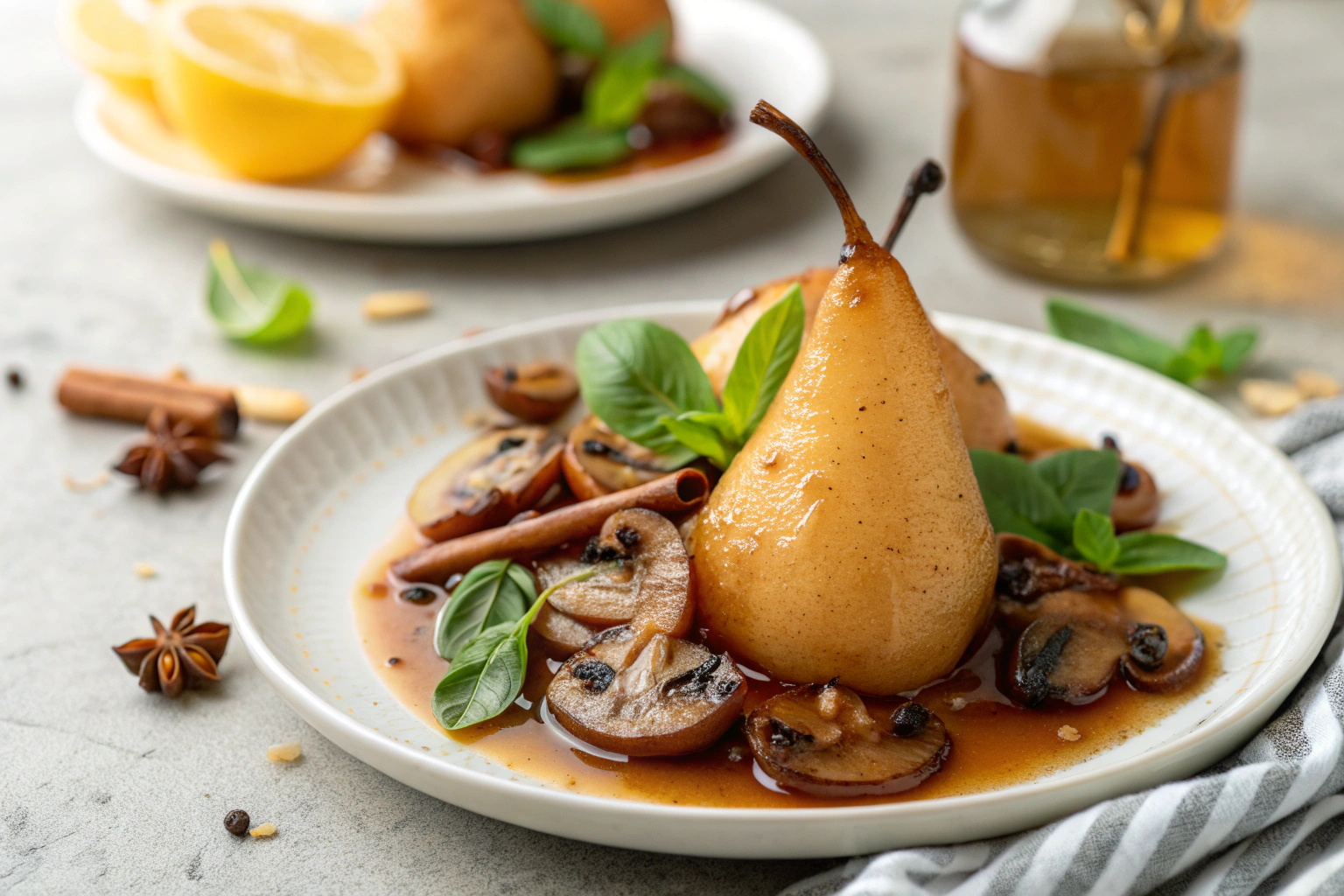
If you’re wondering about the nutritional value of your poached pears creation, take a moment to consider the benefits. Pears are naturally rich in dietary fiber and vitamins, including vitamin C and potassium, making them a smart choice for a healthy dessert. When you poach them, the natural sugars are slightly concentrated, which means you can enjoy their flavor without adding extra sweeteners. However, to keep things light, opt for a sugar substitute or use low-sugar fruit juice instead of water. This small tweak ensures your poached pears are a guilt-free indulgence that won’t spike your blood sugar.
Here’s a quick nutritional breakdown for four medium-sized pears:
| Nutrient | Per Serving (4 pears) | Notes |
|---|---|---|
| Calories | 200–250 | Depends on the amount of added sweetener or liquid. |
| Fiber | 5–6g | Promotes digestion and keeps you full longer. |
| Vitamin C | 10–15mg | Supports immune health, especially when paired with aromatic spices. |
| Antioxidants | Varies | Help fight inflammation and support heart health. |
When you poach pears, you’re not just cooking a dessert—you’re also packing in essential nutrients. The liquid you choose can significantly impact the final product. If you want a light, healthy option, water with a touch of lemon zest is the way to go. But if you’re feeling adventurous, swapping the liquid for apple juice or even a splash of orange can add a tartness that balances the sweetness. Plus, the spices you add can also contribute to the nutritional value. Cinnamon, for example, is known for its antioxidant properties, and star anise contains compounds that support digestion. These small additions make your poached pears not only delicious but also a subtly nutritious treat. So, if you’re ever in doubt about the health benefits of your poached pears, remember that even a simple recipe can pack a punch when it comes to nutrition.
Comparing Poaching Liquids for Flavor and Health
One of the most common questions when it comes to poached pears is, “Which liquid is most commonly used when poaching pears?” While you might think the answer is water with sugar, the truth is, poached pears can thrive with a variety of liquids, each offering a unique flavor profile and health benefits. Let’s take a closer look at these options in a simple comparison:
| Liquid | Flavor | Health Benefits | Best For |
|---|---|---|---|
| Water | Neutral, allowing the natural sweetness of the pears to shine. | Low in calories and free of added sugars or preservatives. | A basic, healthy poached pears recipe for everyday enjoyment. |
| Apple Cider | Eartthy, slightly acidic, and subtly sweet. | Rich in antioxidants and probiotics, supporting gut health. | Perfect for those who want a more complex flavor without added sugars. |
| White Wine (Alcoholic) | Floral and tangy, adding depth to the dessert. | Higher in calories, but the alcohol burns off during cooking. | For a gourmet twist, though non-alcoholic alternatives are preferable for health-conscious bakers. |
| Low-Sugar Fruit Juices | Varied—apple juice offers warmth, orange juice adds zest, and cranberry juice brings a tart, cranberry-like note. | Often lower in sugar than regular juice, but check labels to ensure no added sugars. | Great for those who want to avoid the sugar content of traditional poaching liquids. |
This table gives you a quick reference to choose the liquid that best suits your taste and dietary goals. When you’re wondering, “Do you peel pears before poaching?” remember that peeling just before cooking keeps the skin intact, adding a slight chewiness to your poached pears. If you’re leaning toward poached pears with a twist, consider the unique textures and aromas each liquid can bring. Whether you’re using water for simplicity or a fruit juice for complexity, the key is to let the pears absorb the flavors without overpowering their natural taste. This comparison will help you decide which liquid to use when you’re ready to craft your own poached pears masterpiece.
Storage and Reheating Instructions
Once your poached pears are finished, it’s time to think about how to store them to keep their flavor and texture fresh. You might be tempted to toss them into a bowl and serve them right away, but even the most delicious dessert can lose its magic if not stored properly. The good news is that poached pears are a versatile dish that can be enjoyed at any time, whether chilled, warm, or room temperature.
Here’s how to store your poached pears and keep them at their best:
| Method | How Long | Notes |
|---|---|---|
| Refrigerator | Up to 5 days | Store in an airtight container to prevent drying. Reheat gently in a saucepan with a splash of water or juice to regain that glossy finish. |
| Frozen | 2–3 months | Freeze in an airtight container or freezer bag. Thaw overnight before reheating. The texture might be slightly firmer, but it’s still delicious. |
| Reheating | 10–15 minutes | Heat on the stovetop or microwave, adding a little water to the pan to prevent overcooking and loss of moisture. |
For the best results, store your poached pears in the refrigerator for up to five days. If you’re writing off the idea of making dessert in advance, think again. poached pears taste even better the next day! Just make sure to keep them submerged in the liquid or cover them tightly to avoid drying out. And if you’ve ever packaged yourself with the question, “What does poached pear mean?” you’ll now know it’s a ripe, tender delicacy that can be enjoyed in various forms. Whether you’re preparing a batch for the weekend or planning a week’s worth of healthy snacks, proper storage ensures your poached pears remain as luscious as the day you made them.
Serving Suggestions for Poached Pears
Now that your poached pears are cooked to perfection, it’s time to think about how to serve them. Picture this: you’ve just created these heavenly pears, and you’re trying to decide how to present them. Should you serve them chilled or warm? What sides or toppings will complement their sweet, aromatic flavor? The answer is simple—everything pairs beautifully with poached pears.
For a classic dessert, poached pears shine when served with a dollop of whipped cream or a scoop of vanilla ice cream. The contrast between the warm, succulent fruit and the cool, creamy topping is divine. If you’re feeling adventurous, try pairing them with Greek yogurt or a drizzle of honey for a vegan-friendly twist. Want something even more refined? A sprinkle of toasted nuts or a dusting of cinnamon adds texture and warmth to your dish.
But poached pears aren’t just for dessert. They make an elegant addition to a breakfast spread, sitting beside scrambled eggs and fresh fruit. For a brunch twist, serve them with a drizzle of maple syrup and a sprinkle of sea salt. And if you’re ever wondering, “Do you peel pears before poaching?” the answer is yes, but only just before you start cooking to preserve their texture.
Frequently Asked Questions (FAQs)
Let’s tackle the most common questions about poached pears to ensure your culinary journey is smooth and flavorful. If you’ve ever hesitated to try this recipe, the FAQs below will help you conquer your doubts.
Can I use different types of pears?
Absolutely! While Bosc and Anjou are the most popular choices for poached pears, other varieties like Bartlett or Honeycrisp can work too. However, don’t skip the firm kind—if your pears are too soft, they might fall apart in the liquid. Each type has its own unique sweetness and texture, so feel free to experiment and find your favorite.
Can I make poached pears ahead of time?
You bet! This recipe is perfect for meal prepping. Once the pears are cooked, let them cool, then store them in the refrigerator for up to five days. When you’re ready to serve, warm the poaching liquid slightly and spoon it over the pears for that glossy finish. You’ll be amazed at how the flavors develop over time, making your poached pears even more delicious.
Do I need to peel the pears before poaching?
Yes, but only just before you start cooking. Peeling the pears too early might cause them to brown, but leaving the skin on adds a slight chewiness that complements the tenderness of the fruit. By peeling them at the last minute, you ensure the perfect texture while preserving their natural color.
Perfectly Poached Pears: The Best Recipe You’ll Ever Try
Ingredients
Equipment
Method
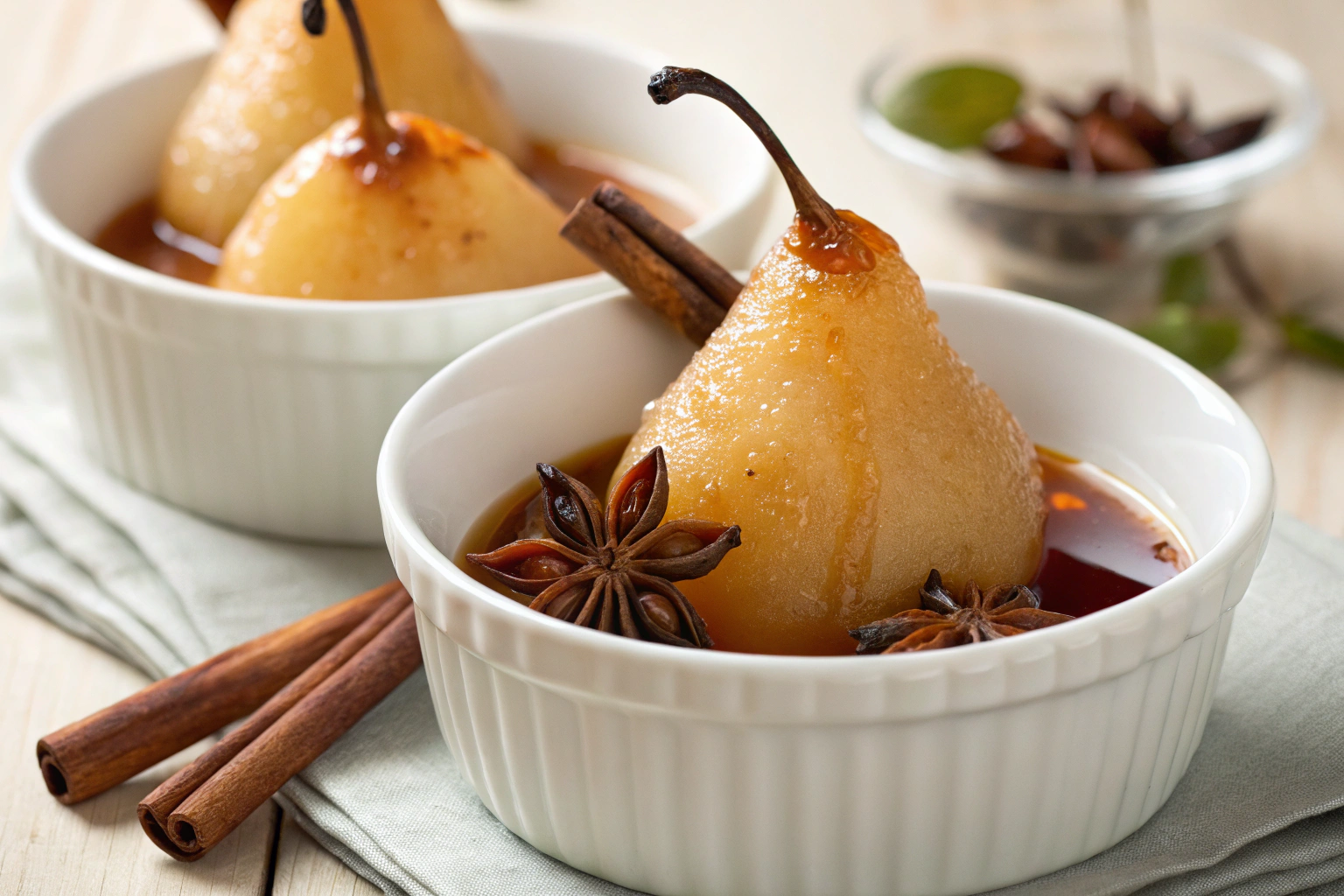
- Peel the pears, leaving the stems intact. Slice the bottoms off so the pears can stand upright.
- In a saucepan, combine water, sugar, vanilla, cinnamon, star anise, and lemon zest. Bring to a boil.
- Place the pears in the saucepan, standing upright. Reduce heat to medium-low, cover, and let simmer for 20-30 minutes, turning occasionally, until tender.
- Using a slotted spoon, carefully remove the pears from the liquid and place them in a serving dish.
- Increase the heat of the poaching liquid and let it simmer until it thickens slightly. Spoon the liquid over the pears to glaze.
Notes
If you love this, you’ll love…
As autumn arrives, discover cozy treats in our fall dessert recipes, from nostalgic Baked Apples to showstopping Salted Caramel Apple Sheet Cake. Apple enthusiasts will adore the warming spices of Apple Cranberry Crisp and handheld simplicity of Apple Pie Bars, while pumpkin lovers can indulge in velvety Pumpkin Bread Pudding or Homemade Pumpkin Ice Cream.
Health-conscious bakers will appreciate the healthy berry cherry crisp, while Vegan Pumpkin Pie offers a plant-based crowd-pleaser. Seasonal gatherings shine with Classic Pumpkin Cake, Pumpkin Bundt Cake, or shareable Pumpkin Cupcakes. For texture contrasts, try crisp Chewy Molasses Ginger Cookies alongside creamy Pumpkin Cottage Cheese Cheesecake. Satisfy chocolate cravings with Pumpkin Chocolate Chip Cookies or decadent Pumpkin Chocolate Cheesecake Bars, then revisit our fall dessert recipes for endless inspiration.
Conclusion
In the end, the joy of poached pears lies in their simplicity and versatility. With just a few ingredients and a step-by-step guide, you can create a dessert that feels both indulgent and nutritious. No wine, no pork, no bacon—just the natural sweetness of the pears combined with the warmth of spices like cinnamon and star anise. Whether you’re serving them as a breakfast treat or a dessert for guests, you’ll notice that poached pears effortlessly elevate any meal.
But how do you know when you’ve mastered this recipe? When you look at the pears and see a blend of tenderness and flavor that’s both comforting and surprising. This is why I recommend making these at least once and keeping the leftovers for later. After all, what’s the use of dessert if it can’t be enjoyed on more than one occasion? Poached pears are the perfect way to enjoy a little sweetness in life, and they’re easy enough to make that even a beginner can feel accomplished. So, why not try this recipe today and see how it transforms your kitchen into a haven of flavor and joy?
If you found this poached pears recipe helpful, you’ll love our weekly newsletter filled with more easy, delicious, and healthier cooking tips. Subscribe today and never miss out on another delicious creation that’s perfect for your kitchen. Plus, don’t forget to share your poached pears with the world—tag us in your photos and tell us how you customized your recipe! You might just inspire others, and that’s the ultimate reward. What will you add to your poached pears next?