

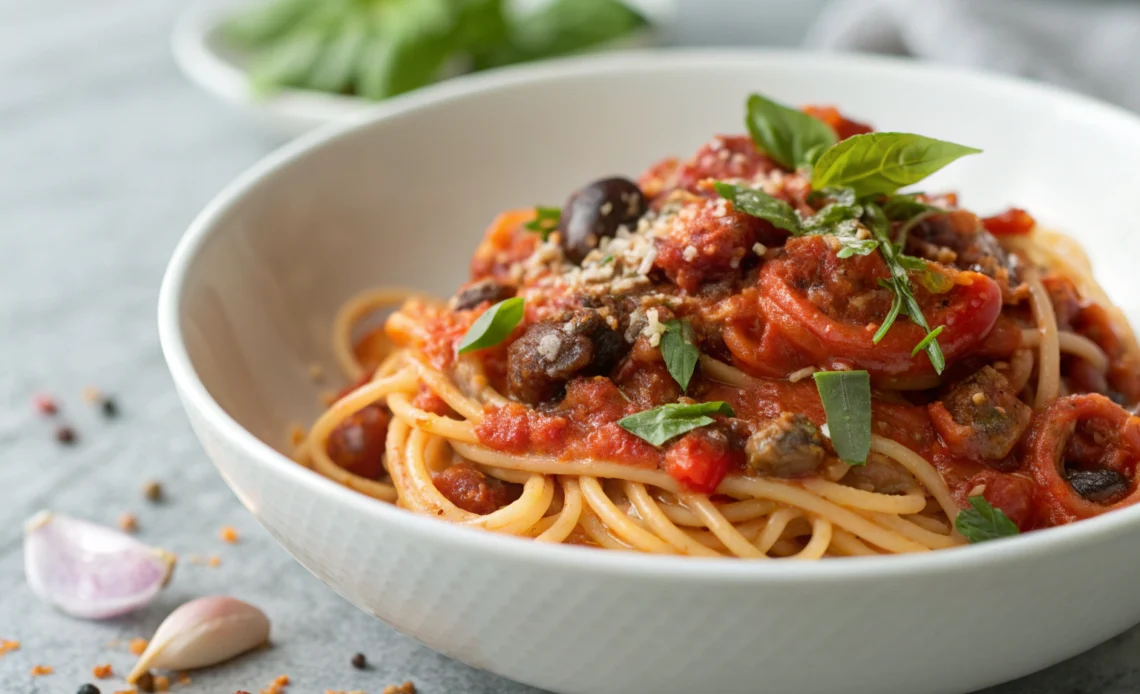
Have you ever craved a dish that’s bursting with flavor but takes less than 30 minutes to make? I have! There are days when I simply don’t have the time (or energy) for elaborate meals. I need something quick, satisfying, and utterly delicious. That’s when I turn to Spaghetti alla Puttanesca.
This classic Italian pasta dish is the answer to those weeknight dinner dilemmas. But there is that name… “Puttanesca” might sound a bit mysterious (or even risqué!), conjuring images of smoky back alleys in old Naples. But let me tell you, the magic of Puttanesca lies in its simplicity: a vibrant sauce made with pantry staples like tomatoes, olives, capers, anchovies, and garlic. The combination is an explosion of savory, salty, and slightly spicy flavors that will have you wondering why you haven’t been making this dish your whole life.
Have you ever wondered why is it called a Puttanesca? Or maybe you’re curious about what is traditional pasta puttanesca? And what about what’s the difference between marinara and Puttanesca? Don’t worry, because by the end of this article, you’ll not only know the answers to these questions but also have a foolproof recipe for creating your own incredible Spaghetti alla Puttanesca at home. So, let’s dive into the flavorful world of this classic dish!
Table of Contents
The Story Behind the Sauce: Unveiling Puttanesca’s Past
Before we get cooking, let’s take a little detour into the history of this intriguing dish. The name “Puttanesca” itself has sparked much debate, with some colorful (and perhaps slightly exaggerated) stories surrounding its origin.
- The “Quick Meal” Theory: One popular theory suggests that Puttanesca was a quick and easy meal that could be prepared between, ahem, “engagements.” The readily available ingredients and speedy cooking time made it a practical choice for those with limited time.
- The Restaurateur’s Tale: Another story tells of a restaurant owner on the island of Ischia who, late one evening with a nearly empty pantry, was asked by a group of hungry customers to make them something to eat. He threw together whatever ingredients he had on hand – tomatoes, olives, capers, and anchovies – and Puttanesca was born!
- A Dash of Improvisation: Regardless of the exact origin, the essence of Puttanesca lies in its improvisational nature. It’s a dish that celebrates the resourceful use of pantry staples, transforming simple ingredients into a culinary masterpiece.
What Makes Puttanesca Unique?
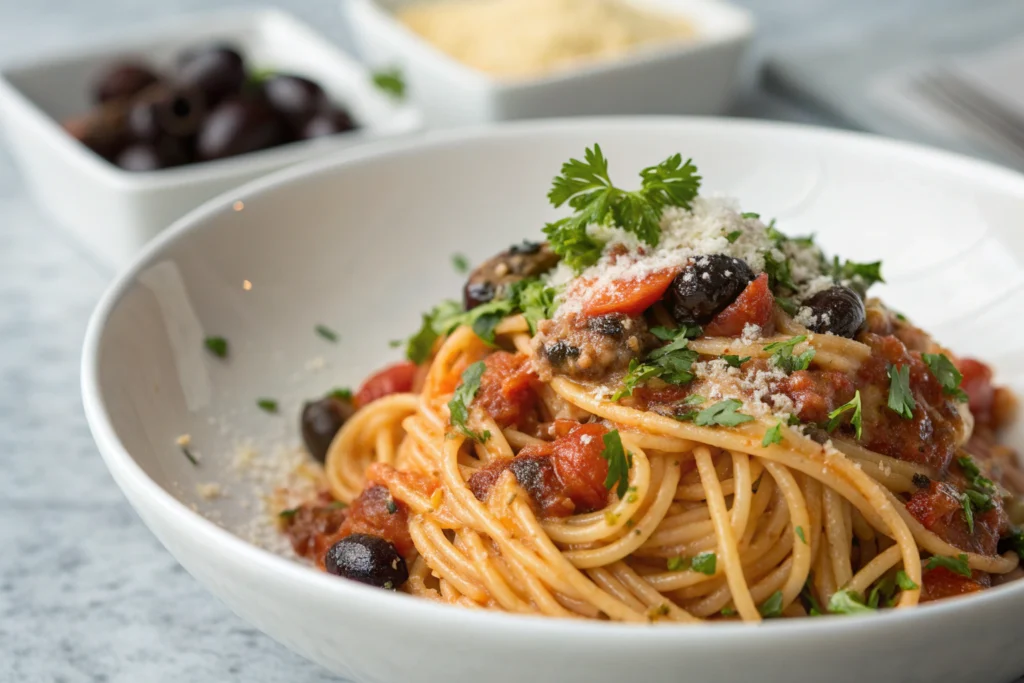
Puttanesca isn’t just another tomato-based pasta sauce. It boasts a unique flavor profile that sets it apart from its counterparts.
- The Salt Factor: The combination of anchovies, olives, and capers creates a distinctive saltiness that permeates the entire dish. This salty base is balanced by the sweetness of the tomatoes and the heat of the chili flakes.
- Bold Flavors: Unlike simpler sauces like marinara, Puttanesca doesn’t shy away from assertive flavors. The garlic, anchovies, and capers contribute a pungency that is both intriguing and addictive.
- A Mediterranean Medley: Puttanesca captures the essence of Mediterranean cuisine, showcasing the region’s love for olives, capers, and sun-ripened tomatoes. It’s a taste of the Mediterranean in every bite!
The Ultimate Spaghetti alla Puttanesca Recipe
Now that we’ve explored the origins and unique characteristics of Puttanesca, let’s get down to the business of cooking! This recipe is my go-to for a quick, flavorful, and satisfying meal. Feel free to adjust the ingredients to your liking, but I encourage you to try it as written first to experience the true magic of Puttanesca.
Ingredients:
- 200g / 7oz spaghetti, or other long pasta
- 2 tbsp extra virgin olive oil, plus more for drizzling
- 2 garlic cloves, finely minced (knife, not garlic press)
- 3 anchovy fillets, finely minced (Note 1)
- 1/4 cup pitted black olives, preferably in oil, quartered (Note 2)
- 1 tbsp capers, drained (Note 3)
- 1/4 tsp chilli flakes (red pepper flakes)
- 400g / 14oz can crushed tomato (or hand crush whole canned tomatoes)
- 1/2 cup water
- 1 tsp fresh oregano, roughly chopped (sub 1/4 tsp dried)
- 1/8 tsp kosher / cooking salt (or 2 pinches table salt)
- 1/8 tsp black pepper
- 1/4 tsp sugar, if needed (depends on tomato quality, Note 4)
- 2 tbsp fresh basil, roughly chopped (Note 6)
Instructions:
- Cook the pasta: Bring a large pot of salted water to a boil. Add the spaghetti and cook according to package directions until al dente. Reserve about 1/2 cup of pasta water before draining.
- Sauté the aromatics: While the pasta is cooking, heat the olive oil in a large skillet over medium heat. Add the minced garlic and anchovies. Cook, stirring constantly, until the garlic is fragrant and the anchovies have dissolved into the oil (about 1-2 minutes). Be careful not to burn the garlic!
- Add the remaining ingredients: Stir in the olives, capers, and chili flakes. Cook for another minute, allowing the flavors to meld together.
- Simmer the sauce: Pour in the crushed tomatoes and water. Season with salt and pepper. Bring the sauce to a simmer and cook for about 15-20 minutes, or until the sauce has thickened slightly. Taste and adjust seasoning as needed. If the tomatoes are too acidic, add a pinch of sugar to balance the flavors.
- Combine pasta and sauce: Add the drained spaghetti to the skillet with the sauce. Toss to coat, adding a little of the reserved pasta water if needed to create a creamy consistency.
- Garnish and serve: Stir in the fresh oregano and basil. Serve immediately, drizzled with extra virgin olive oil and garnished with additional fresh basil, if desired.
Notes:
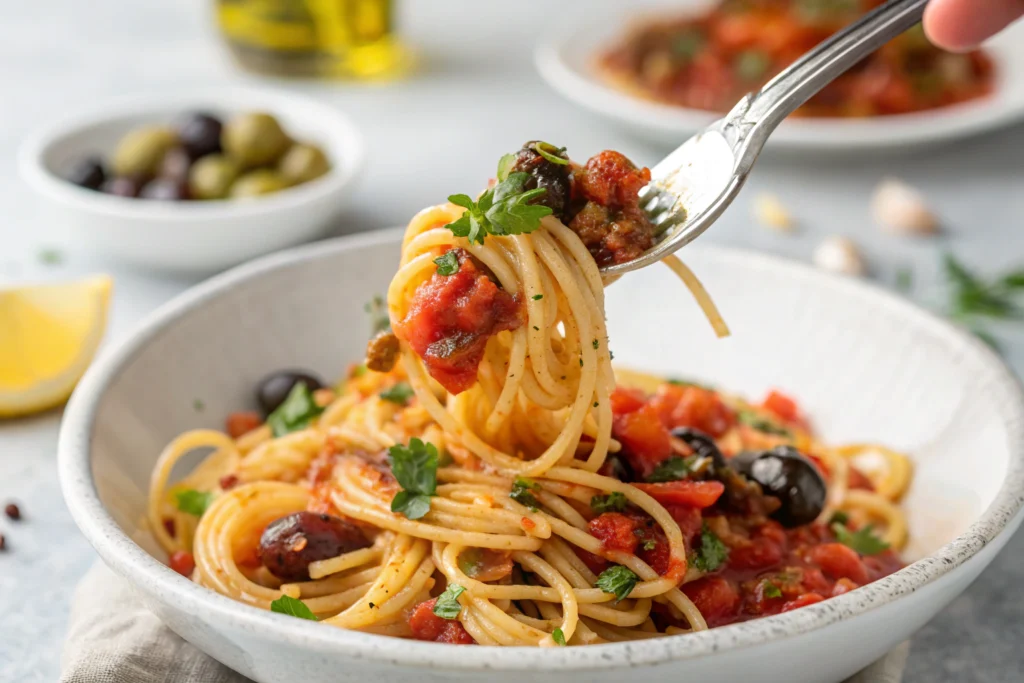
- Anchovy anxiety? Don’t be afraid of the anchovies! They add a savory depth of flavor that is essential to Puttanesca. If you’re really hesitant, start with just two fillets and see how you like it.
- Olive options: I prefer black olives in oil for their rich flavor and soft texture, but you can use any type of pitted olive you like. Kalamata olives would also be a delicious choice.
- Caper considerations: Capers packed in salt should be rinsed thoroughly before use to remove excess saltiness.
- Tomato tweak: The sweetness of tomatoes can vary depending on the brand and season. If your sauce tastes too acidic, add a pinch of sugar to balance the flavors.
- Spice it up! Adjust the amount of chili flakes to your liking. If you’re a fan of fiery food, feel free to add more!
- Herb happiness: Fresh herbs are always best, but if you don’t have fresh oregano and basil on hand, you can substitute with dried herbs. Use about 1/4 teaspoon of dried oregano in step 4 and sprinkle dried basil over the finished dish.
Tips and Tricks for the Perfect Puttanesca
Want to take your Puttanesca game to the next level? Here are a few tips and tricks that I’ve learned over the years:
- Use high-quality ingredients: The quality of your ingredients will directly impact the flavor of your Puttanesca. Opt for good-quality olive oil, canned tomatoes, and olives.
- Don’t overcook the garlic: Burnt garlic can ruin the entire dish. Keep a close eye on it and cook it over medium heat until it’s fragrant but not browned.
- Emulsify the sauce: Adding a little pasta water to the sauce helps to create a creamy emulsion that clings to the pasta beautifully.
- Taste and adjust: Don’t be afraid to taste the sauce as it simmers and adjust the seasoning to your liking.
- Serve immediately: Puttanesca is best enjoyed fresh, so serve it immediately after cooking.
Variations and Adaptations: Puttanesca Your Way
The beauty of Puttanesca lies in its versatility. Feel free to experiment with different ingredients and adapt the recipe to your own taste preferences.
- Seafood Sensations: Add a handful of shrimp, mussels, or clams to the sauce for a seafood twist.
- Veggie Variety: Incorporate other vegetables like bell peppers, zucchini, or eggplant for a heartier dish.
- Spice It Up: If you like your food extra spicy, add a pinch of cayenne pepper or a finely chopped chili pepper to the sauce.
- Cheese, Please: While not traditional, a sprinkle of Parmesan cheese can add a salty, savory note to the finished dish. (Although purists may disagree!)
Puttanesca Ingredient Substitutions
Sometimes, you might find yourself missing an ingredient or two. Here are some substitutions you can use in a pinch:
- Anchovies: If you absolutely can’t stand anchovies, you can omit them altogether. However, be aware that the flavor will be significantly different. You can try adding a pinch of fish sauce or a dash of Worcestershire sauce for a similar umami flavor.
- Capers: If you don’t have capers on hand, you can use chopped green olives as a substitute.
- Olives: Feel free to use any type of pitted olive you like. Kalamata olives, green olives, or even a mix of both would work well.
- Fresh Herbs: If you don’t have fresh oregano and basil, you can substitute with dried herbs. Use about 1/4 teaspoon of dried oregano in step 4 and sprinkle dried basil over the finished dish.
Nutritional Value of Spaghetti alla Puttanesca
Here’s a table outlining the approximate nutritional content per serving of Spaghetti alla Puttanesca (estimated, may vary based on specific ingredients and portion sizes):
| Nutrient | Amount per Serving |
|---|---|
| Calories | 400–500 |
| Protein | 15–20g |
| Fat | 15–20g |
| Saturated Fat | 2–3g |
| Carbohydrates | 60–70g |
| Fiber | 5–7g |
| Sugar | 5–8g |
| Sodium | 800–1200mg |
| Vitamin A | 15–20% DV |
| Vitamin C | 10–15% DV |
| Iron | 10–15% DV |
Remember that this is just an estimate, and the actual nutritional content may vary.
Puttanesca: Fresh vs Canned Tomatoes
| Feature | Fresh Tomatoes | Canned Tomatoes |
|---|---|---|
| Flavor | Brighter, more delicate | Richer, more concentrated |
| Texture | Slightly watery | Smoother, more consistent |
| Convenience | Requires peeling & chopping | Ready to use |
| Availability | Seasonal | Available year-round |
| Acidity | Can be more acidic, may need sugar | Generally less acidic |
What to Serve with Spaghetti alla Puttanesca?
Now that you’ve mastered the art of making Spaghetti alla Puttanesca, you might be wondering what to serve alongside it. Here are a few suggestions:
- A Simple Salad: A fresh green salad with a light vinaigrette is the perfect complement to the rich flavors of the Puttanesca.
- Crusty Bread: Serve with a loaf of crusty bread for soaking up the delicious sauce.
- Grilled Vegetables: Grilled vegetables like zucchini, eggplant, or bell peppers add a healthy and flavorful side dish.
- Garlic Bread: For the garlic lovers out there, garlic bread is always a welcome addition.
Spaghetti alla Puttanesca: Your New Weeknight Hero
Spaghetti alla Puttanesca is more than just a pasta dish; it’s a celebration of simple ingredients, bold flavors, and culinary improvisation. It’s a dish that can be whipped up in minutes using pantry staples, making it the perfect solution for those busy weeknights when you crave a delicious and satisfying meal. From its mysterious origins to its unique flavor profile, Puttanesca is a dish that is sure to captivate your taste buds and leave you wanting more.
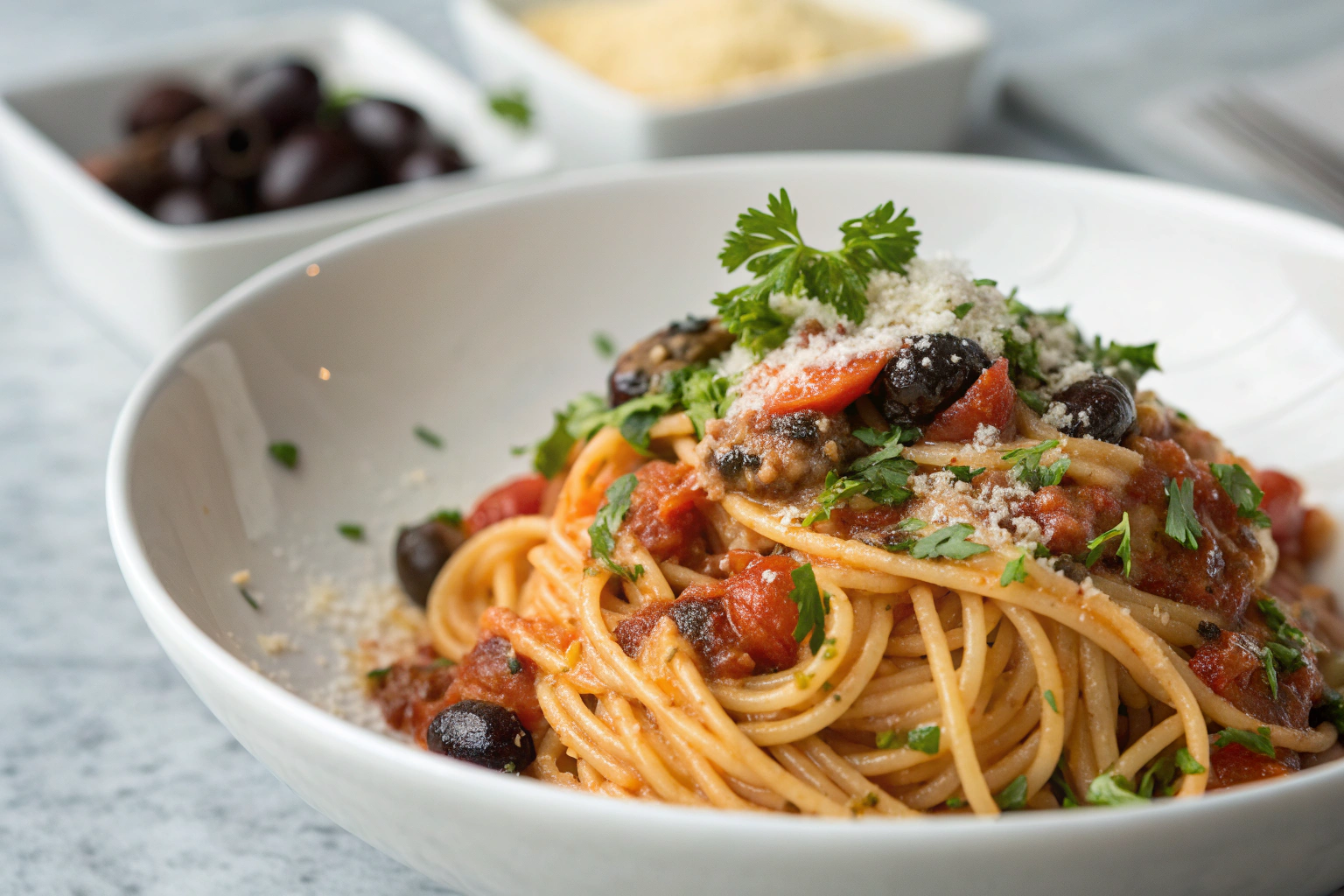
Spaghetti alla Puttanesca
Ingredients
Equipment
Method
- Cook the spaghetti in a large pot of boiling salted water according to package directions until al dente.
- While the pasta is cooking, heat the olive oil in a large sauté pan over medium heat. Add the garlic and cook until fragrant, about 1 minute, being careful not to burn it.
- Add the anchovies and cook, stirring, until they dissolve, about 1-2 minutes.
- Add the olives, capers, and chili flakes. Cook for about 1 minute, stirring constantly.
- Pour in the crushed tomatoes and water. Bring to a simmer, then reduce the heat and cook for 10 minutes, stirring occasionally.
- Stir in the oregano, salt, pepper, and sugar (if using). Taste and adjust seasonings as needed.
- Drain the pasta, reserving about 1/2 cup of pasta water.
- Add the pasta to the sauce and toss to combine, adding a little pasta water if the sauce seems too thick. Stir in the basil.
- Serve immediately, drizzling with extra olive oil if desired.
Notes
If you love this, you’ll love…
Summer seafood pasta recipes offer endless inspiration for warm-weather meals, whether you’re whipping up a rustic mussels spaghetti tomato sauce or indulging in lobster mac and cheese. For lighter fare, try the citrusy zing of a red Argentinian shrimp scampi recipe, or balance richness with the umami kick of Pasta with Tuna Carbonara. Clam lovers will appreciate the briny simplicity of spaghetti alle vongole, while those craving heat can dive into crab linguine chili garlic. Summer seafood pasta recipes shine in creamy variations too, like crab fettucine alfredo, proving this category offers something for every palate.
So, what are you waiting for? Give this recipe a try and experience the magic of Spaghetti alla Puttanesca for yourself! And while you’re at it, why not sign up for our newsletter to receive more delicious recipes and culinary inspiration straight to your inbox? Who knows, maybe you’ll discover your new favorite dish! Aren’t you excited to explore this treasure in the world of pasta and experience a dish that’s both incredibly simple and unbelievably satisfying?
Conclusion:
Canned tomatoes work perfectly well in Puttanesca, especially during the off-season. If using fresh tomatoes, choose ripe, flavorful ones and consider adding a pinch of sugar to balance the acidity.